You may have noticed the website URL has changed from Jonathanmilesphotography.com to Bootsboatsandbike.com. I had thought this would be a bit of a nightmare but it was actually really simple. The reason for the change is because I need the former to name for a new photo sales site I’m hoping to set up in the next few months. This blog will continue as as normal.
I chose the new name because all my stories and photos do involve an adventure with boots, in boats, or on bikes!
Originally published in April 2015 on my old blog.
Having spent the night parked at the Glencoe ski centre whilst the wind whistled and shrieked around the van, things had not sounded very promising for a good day on the hills come morning. With dawn however, the winds had fallen slightly although they were still energetically gusting and rushing between the hills causing clouds to scud and dance around the peaks as we shouldered our packs and began the walk in to Sron na Creise.
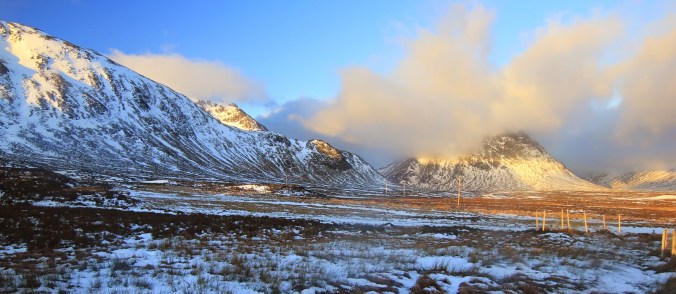
A line of telegraph poles marked our route across the floor of the valley as they marched through a landcape of tussocky bog which because of the cold night was thankfully well frozen. The wind was bitterly cold but the early morning sunlight was beginning to cast a warm glowing light on the snow shining below a beautiful blue sky.
The Buachaille dances with the morning clouds
Rounding the spur of Creag Dhubh, Sron na Creise comes into view a series of gully lines clearly visible cutting through the rock headwall above its north facing choire. We had wanted to climb the classic Inglis Clarke Ridge, a classic very easy mixed line; but as we approached, it looked more and more out of condition, black buttresses staring back at us unwelcoming and obviously ice free. The Weep would have been a good fall back option but a) we did not know about it and b) looking back at my photos the fun bits looked buried!
Sron na Creise
Central Gully which is only grade 1 was easy to find, arrow straight it leads up through the cliffs that guarded the choire rim, and was full of good neve making the climbing easy and enjoyable. Unfortunately we could not take advantage of the undoubted magnificence of the situation and views, as by now cloud had entombed the mountain and by the time we reached the summit ridge a bitter wind was blowing.
Not easy to get off route…
From the top of the climbing it’s about a kilometre along a broad ridge to the summit of Criese proper. Following a compass baring we had to make sure we did not stray onto any cornices in the poor visibility, our path illuminated by a watery, hazy sun which barely managed to break through the cloud with any definition.
Having basked in the magnificent summit view we looked to find the route across to a neighbouring munro Meall a Bhuiridh which joins Creise by a very narrow ridge and col about fifty meters below the summit plateau. Visibility was poor and after we had paced out the distance all we could see was the eastern slopes of the mountain falling away steeply into Mam Coire Easain with no obvious lines of weakness to hint where we should descend.
We hunted round in the clag that surrounded us and eventually spotted a small cairn which convinced us we were in the right place, even if the angle of the slope suggested otherwise! Having cautiously descended about 30m vertically, the gradient relented and the ridge line emerged out of the mist as the clouds began to clear to revel the summit cone of Meall a Bhuiridh ahead.
Whales in a stormy sea
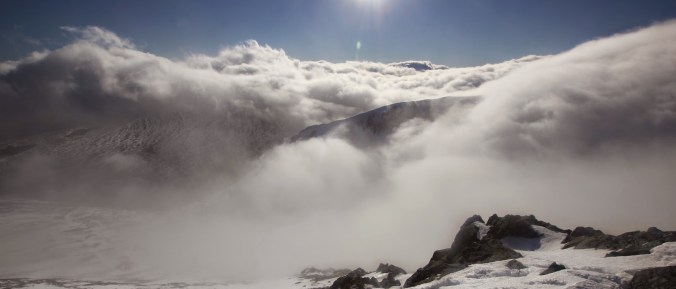
Having crossed the windswept col we pulled steeply onto our second Munro of the day and with it the weather changed again. As we reached the summit we broke through just high enough to be clear of the cloud inversion. It was one of those fantastic moments that the hills sometime offer you; like standing on a lonely rock at the edge of the sea, the clouds rolling and boiling around us as the ridges of the surrounding hills broke in and out of view like giant whales surfacing in a stormy sea.
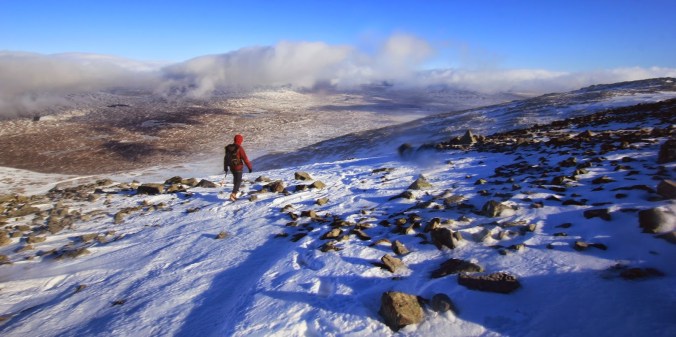
Meall a Bhuiridh is also home to the Glenco ski centre, the lift of which reach almost to the summit. As we descended along the edge of the piste the clouds slowly cleared in front of us revealing the endless stage of Rannoch Moor locked tight in winters grip. A great day.
Dom descends towards the ski centre with Rannoch Moor in the distance
I captured some of the day on video using a mix of go pro head cam and my SLR.
Updated from my old blog just to get everyone in the mood for winter…
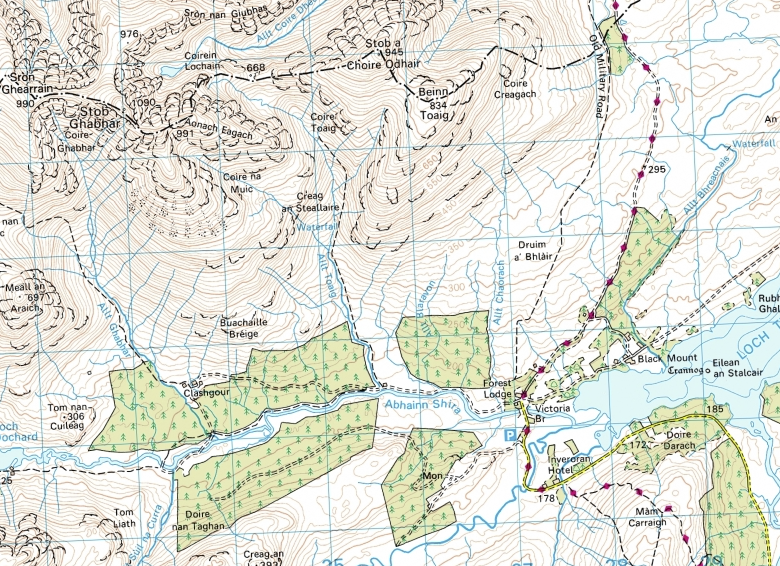
Stob Ghabhar and Stob a Choire Odhair are two Munros that form part of the Black Mount west of Rannoach Moor and overlooking Loch Tulla. Climbing Stob Ghabar in winter is made a little bit more interesting two easy snow couloirs imaginatively (in what must have been a burst of creativity) given the titles “upper” and “lower” with give access to the summit from the north.
The Lower Couloir leaves from just above a small lochain perched high up at the head of the Allt Cchoire Dhearbhadh itself a long slog across the high plateau west of the West Highland Way as it crosses Rannoach Moor.
Looking for some climbing on a dull overcast day Dom and I decided to approach from the south parking near Inveroran and walking up the old stalkers track that runs up into to Corie Toaig and the col at 668m between the two Munros. From here it looked like a short traverse round to the lochain and the climbing.
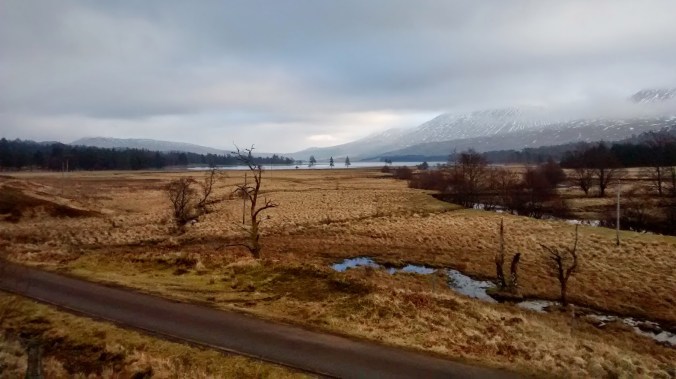
Overcast sky above Loch Tulla
Loch Tulla in slightly better Weather
Corie Toaig
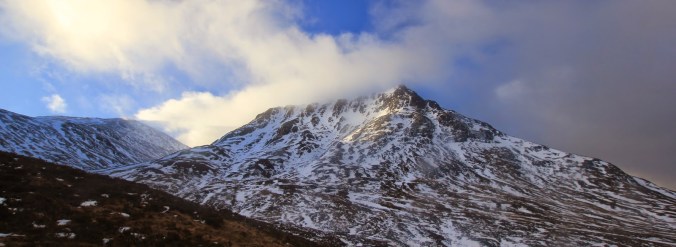
I think this is the same peak in slightly better weather?
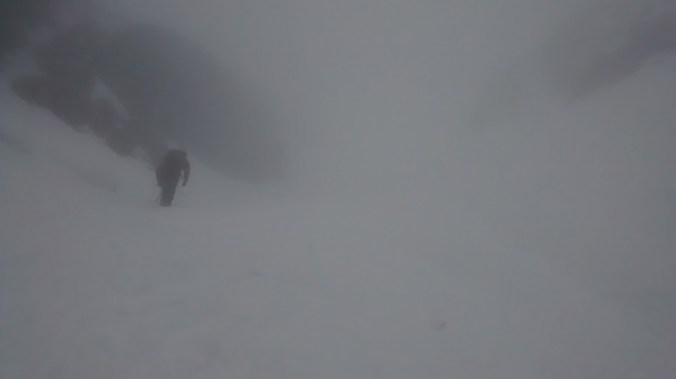
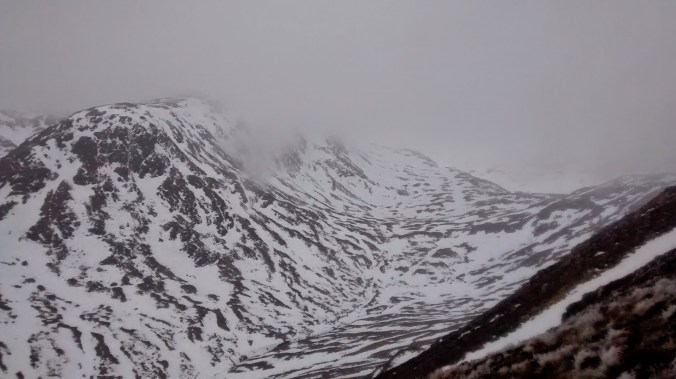
A good track leads most of the way to the col, crossing the snow line at about 500m we are soon enveloped in thick fog which obliterates the horizon and leaves us struggling for reference points as snow and sky blur in to one and classic Scottish white out conditions. The disorientation especially on relatively open ground makes route finding difficult and both Dom and I have to work hard to make sure we hit the col at the right point as I display an alarming tendency to let the terrain pull me too far to the east.
From the col there is no chance of catching sight of the lochain and we are faced with a mass of white cloud into which we descend on a baring taken off the map; pacing out the distance we take great care, conscious of the fact that the lochain is probably frozen with a covering of snow – not a good place to blunder out on to! Finally in the matt light which surrounds us the eyes catch sight of a hint of blue snow to our right giving away the position of the water, barley noticeable in the fog.
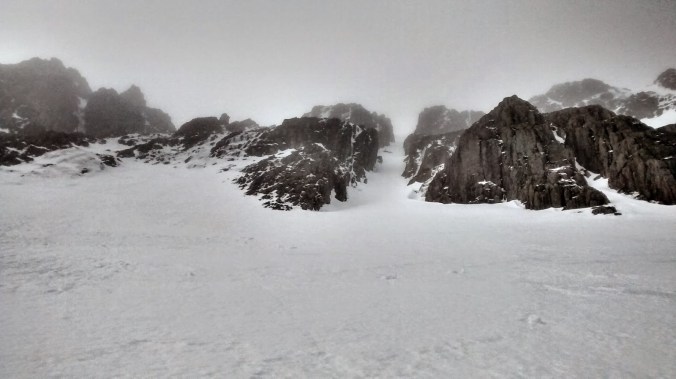
Where are we?
Really, where are we???
However finding the lochain was only the start of the difficulties, with viability so poor there is no sign of the couloir or even any real rock bands above us, leaving us with little indication of where to go. The 1:25:000 OS map indicates a spur of rock running down to the edge of the water which forms the right hand edge of the run out fan leading up into the funnel of the Lower Couloir. Contouring a safe distance from the edge of the water we traverse round until this band of rock emerges from the mist then turn left and begin to climb steeply. The couloir is wide and its only after a couple of hundred meters that it narrows to the extent we can see both walls giving us the confidence we are on the right track. The terrain is steep of grade 1 but we have finally come across a line of foot prints for us to follow making the work easier and helping convince us we are on the right track.
The gully finishes on a steep upper snow field, continuing straight up would eventually lead to the summit but to reach the Upper Couloir we must traverse left over steep terrain which were it not for the zero visibility would feel very exposed. The architecture of the mountain is very difficult to piece together in this weather but our route is clear from this photo on UKC showing the narrow gully cutting a crescent shape through the summit buttress.
The gully itself is excellent, narrow and well packed with good ice, a grade harder than the Lower Couloir with a step of grade II where I wished the rope was not snug and secure in my rucksack as I climbed it. I captured the short brown trouser moment for posterity below.
The gully finished pretty much on the summit which was being lashed by a bitterly cold wind and not the place to linger especially without any view to distract the attention and the camera. We quickly dropped down the ridgeline to the col grabbed a bite to eat and then traversed on to Stob a Choire Odhair which felt hard on the legs which had already put themselves through a significant amount of accent. On the top I was forced to deploy the emergency Harribo for a sugar filled decent back down to the van.
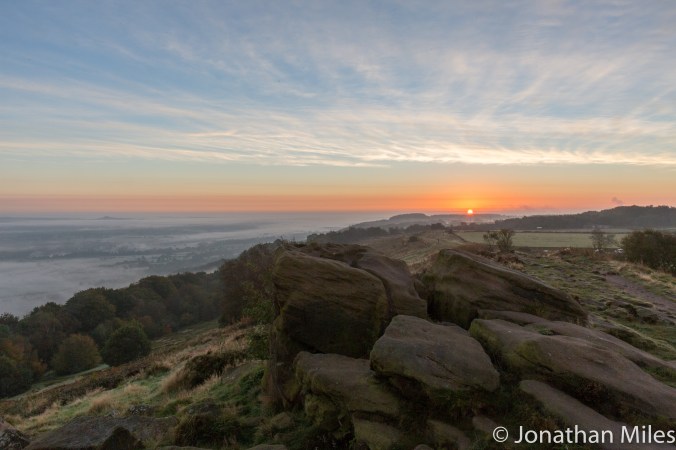
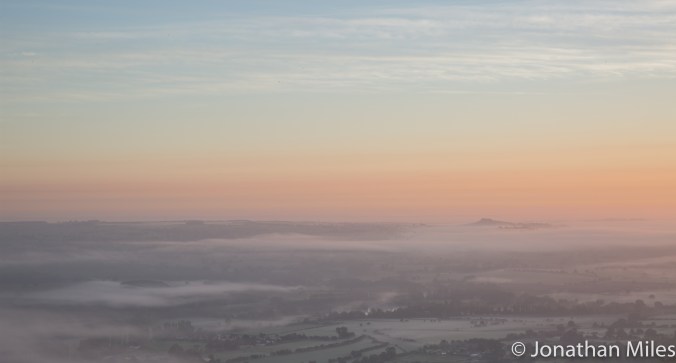
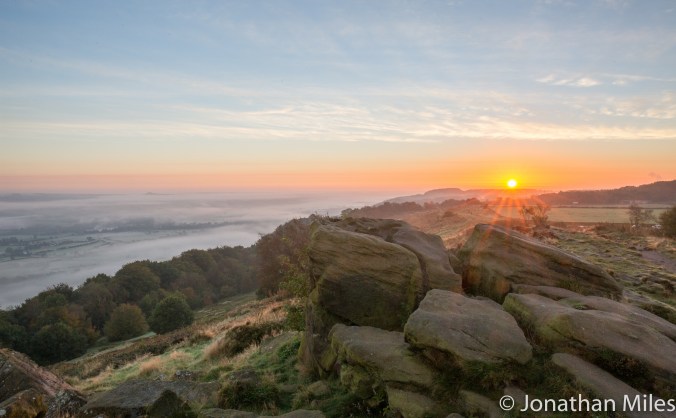
On Monday morning I visited the Chevin above Otley based on a good forecast for a sunrise and cloud inversion, I was not disappointed! Rather than the Warfe Valley being full of cloud it was patchy with fields and trees poking through the dendrites of cloud. Almscliffe Crag poked through the cloud in the middle distance and the sky took on the distinctive colours of a sunrise approaching winter.
The sun emerges from behind the ridge
Almscliffe Crag in amongst the clouds
As the sun rose above the horizon I managed to capture this sunburst
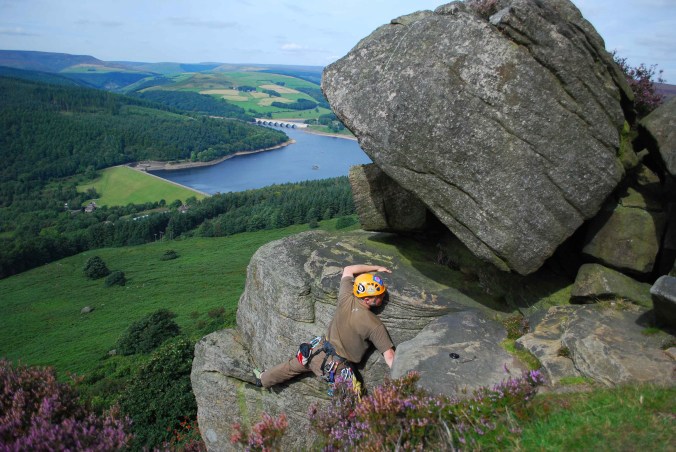
Bamford Edge is a great viewpoint down onto Ladybower Reservoir and the elegant bridges that skip across the water carrying the Snake Pass. I wanted to photograph an early autumn sunrise in the hope there would be a bit of an inversion over the Derwent Valley, so took a punt on the forecast for Wednesday morning and decided to camp to avoid an early start.
Arriving just too late to get any sunset pictures I chatted with some photographers who had been there a few hours and learned the sunset and been a bit poor anyway. Coming into autumn I’m now taking a tent outer with me to use as a tarp for a little extra shelter and pitched up on the top of the cliff giving a brilliant view of the reservoir; as long as I don’t suddenly start to sleepwalk!
Unfortunately morning dawned far too misty to take any decent images but is still a great location for a wild camp.
Another migration from my old site, currently working on some new adventures…..
The North Yorkshire Moors are my forgotten National Park, less than an hour away yet constantly overlooked for the more precipitous vistas of the Dales, The Lakes, Snowdonia, or the crowded gritstone edges of the Peak District.
Enter a caption
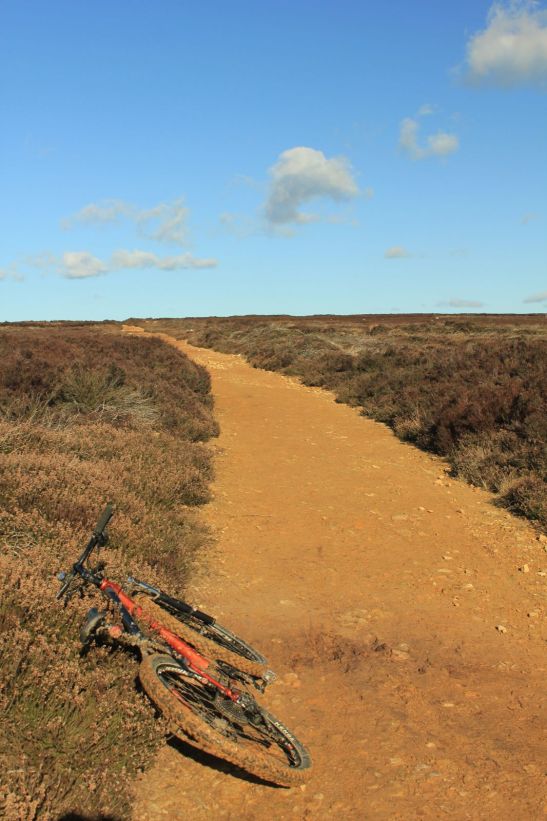
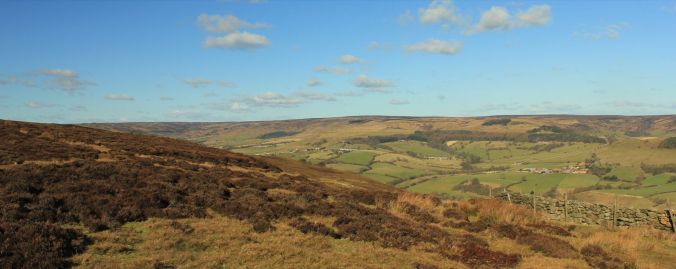
It really shouldn’t be the case though, every time I visit the Moors I’m struck by the the beauty of the place, not so rugged or savage as its other northern neighbours, but an open barren beauty; the sky feels bigger here than anywhere else in the UK with no large features to draw the eye; and below the bright azure blue of a crisp winter day there are few better place to put miles under the wheels of your bike.
Rosedale
Its cold despite the lack of winter snow, puddles are covered with a thin film of ice which crunches satisfactorily under the tread of the tyres; mud frozen into ruts and bumps ready to kick your wheels and bounce the unwary sideways.
Last year when I was here there was snow on the ground, this year winter has failed to really get a grip of the land, stories of huge snowdrifts cutting off valleys appear from a different time. The colours are somber a pallet awash with the yellows and greens in the valley blending into the browns of the vast heather moorland.
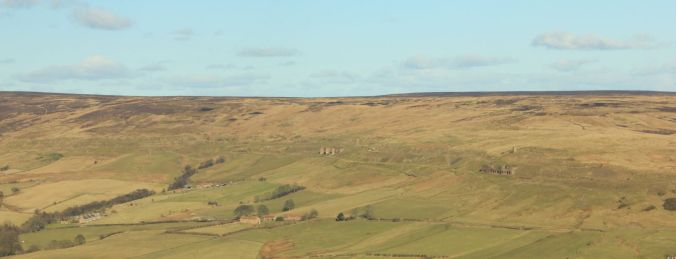
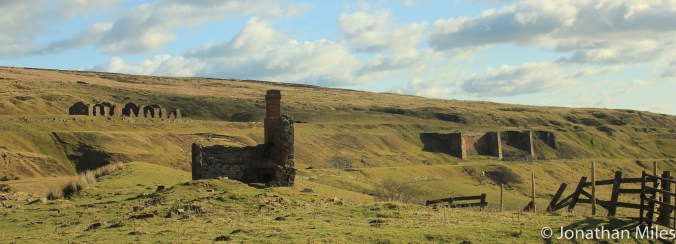
Old limekilns below the moors
The valley was not always this quite, the clues to its noisy active past are everywhere. On the far hillside ruins blend in against the winter colours, a thin scar running almost horizontally across the moor then curving all the way back to the track I’m following contouring smoothly around the hillside.
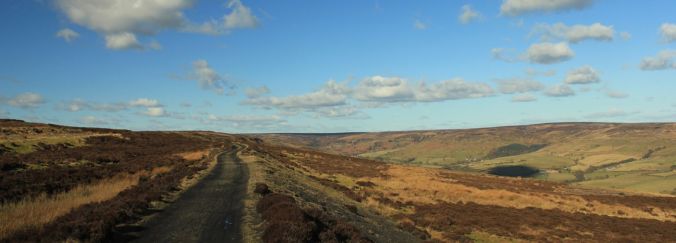
I’m cycling along the course of the old Rosedale Railway built in the nineteenth century to take iorn ore from the mines over the top of the Moor and down to the furnaces in Teeside. Between 1856 and 1926 the valley was a centre of iron ore production and rang to the sound of hammers, and the clank and hiss of trains and wagons.
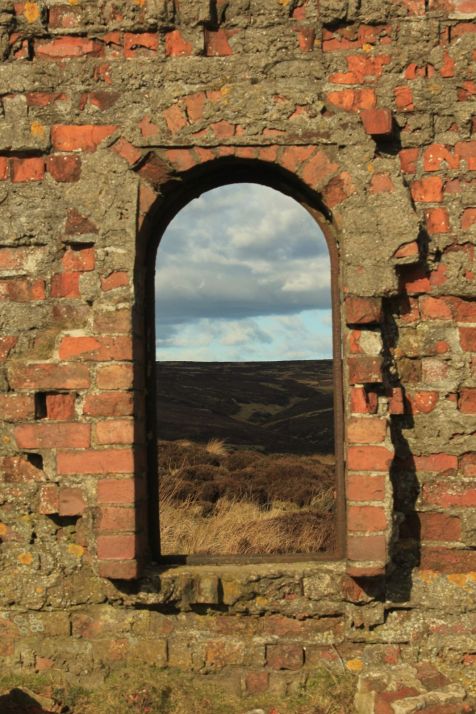
The old railway makes an excellent easy surface to ride along, picking it’s way round the hillside. Little is left of the infrastructure it once served a chimney here, a wall there, its window now looking neither out or in. Then the mine itself a huge yawning shaft in the ground from which the whine of the wind wails and cries.
A room with a view
Round the head of the valley the line of the railway fades out twisted, broken, and buried by a series of landslips over the last eighty years as nature slowly reclaims the landscape for it’s self, sculpting away the hand of man. Here the biking becomes a bit more technical, a narrow trail, with mud and water, the telling signs as to why the land here has changed so much in the life time of a man.
Later I cycle over a couple of large embankments with steep drops on either side, still proud markers of the hand of man in the landscape. The railway ends just after the east mines, now little more than a jumble of walls which once housed the men who toiled below ground, other walls mark the old workshops, coal stores, and pumping house. By far the largest structure is the brick kiln supports 20m high an built into the hillside, two of the three have collapsed sending a cascade of brick fanning out below them, inevitable victims of entropy.
Following the old railway
Rosedale Ruins
Somehow I’m quite struck by the idea of this moorland railway, the thought of a trail of white steam, and grey smoke against the pastel colours of the moor, the audacity of the Victorians for building it. There is a melancholy nature to the ruins, a sadness of times passed that fits in with the barren beauty of the moor. Thats what made it such an enjoyable ride, the feeling of peeling back the history of the landscape and painting pictures with my mind of that lost world.
Another blast from the past migrated to the new site…
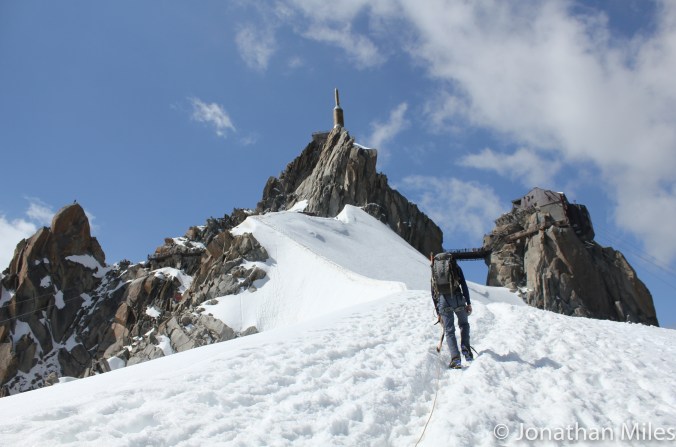
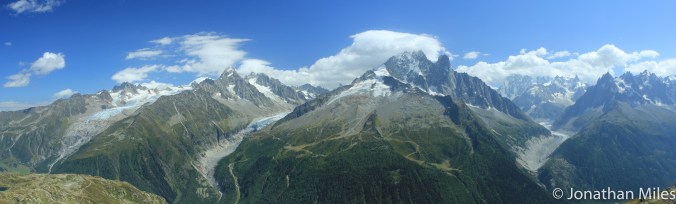
The Aiguille du Tour and the Tour Glacier are far left.
“Everything is MOVING!” my inner voice shouts, compounding fear and dread at the situation I find myself in. This is the bit of alpinism I don’t like, the feelings of vulnerability and nakedness. The deep unease of being somewhere really dangerous with no way to escape other than to carefully move through it. My climbing partner Dom and I are trying to climb the Table du Roc Ridge on the Aiguille du Tour one of the smaller mountains in the Mont Blanc Range and have gone off route a bit. Unfortunately the couloir in which we now find ourselves appears to be constructed of rock with the natural consistency of Wheatabix.
Piles of shattered granite lie everywhere, a loose morass from boulders the size of cars down to fine sands waiting for something, or someone to dislodge them into the abyss and on to us. It could be anything, a settling caused by a minute thawing of snow and ice as the sun rises over the horizon and its rays strike the upper sections of the couloir. Already I have heard a stone whistle unseen past my head like a bullet. Looking up all I see is more of the same, a tottering pile of choss, from which any minute something could detach and kill us.
Objective dangers (factors which you can’t really control) have always been a nagging doubt in my mind putting me off alpinism. The fact that however good you are or how carefully you plan your days something outside your control can kill you is remarkably brutal. To die because at that point in time a serac decided to collapse, or a stone fly down the mountain through the space you occupy for a few seconds or minutes seams so arbitrary, so pointless, and to me so disturbing, it overshadows the great joys I get from being in the mountains.
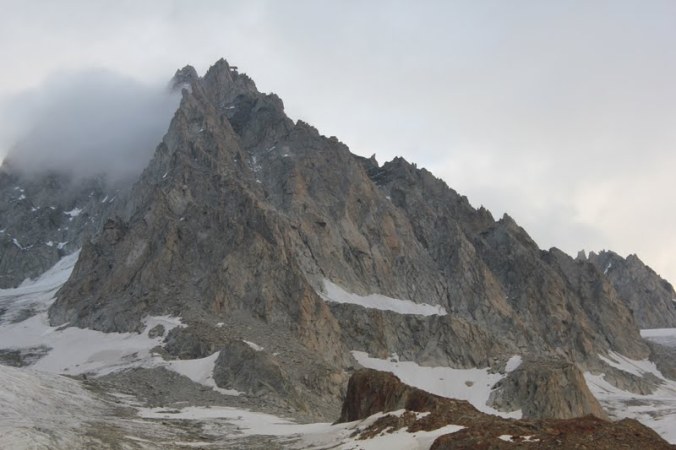
The Table du Roc is just below the apparent right (south) summit. The true summit is about 400m further along the ridge.
Generally routes with high objective danger are well known, obvious; if you must climb them you can minimize the risks by getting there early before the sun hits the slopes when the risk of stone fall or serac collapse is lessened by cold. Of course the best way is just avoid the routes altogether; the Gervasuti Couloir on the Tacul looks a fantastic route but I have no intention of spending hours with those 10,000 tonne seracs perched over my head waiting to calve onto me.
Some objective dangers are inescapable if you want climb in the mountains, snow covered crevasses are an accepted risk of the sport, but one which can be vastly reduced by roping up; although it must still be terrifying to fall through into one! You can never eliminate objective danger but you can reduce it to a level where it is no longer an overriding concern impinging on your enjoyment (I don’t for example worry that when I walk in the woods a tree branch is going to fall on me but it could, and does happen occasionally).
Mountains are dynamic entities alive with change, and would be shadows of themselves without it. The spires and runnels which catch the eye and draw the foot are the result of nature sculpting the land with its tools of wind, rain, ice and thaw shattering and shaping the rock over eons, covering the mountain with detritus drawn inexorably down by gravity.
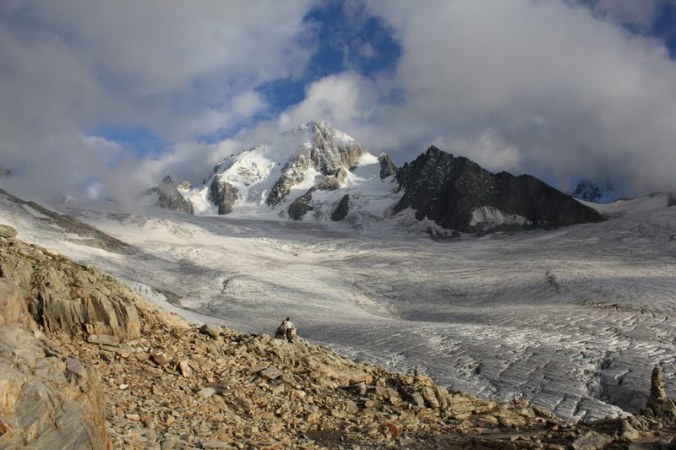
The Aguille du Chardonet clocked in evening cloud from above the Albert Premier Hut
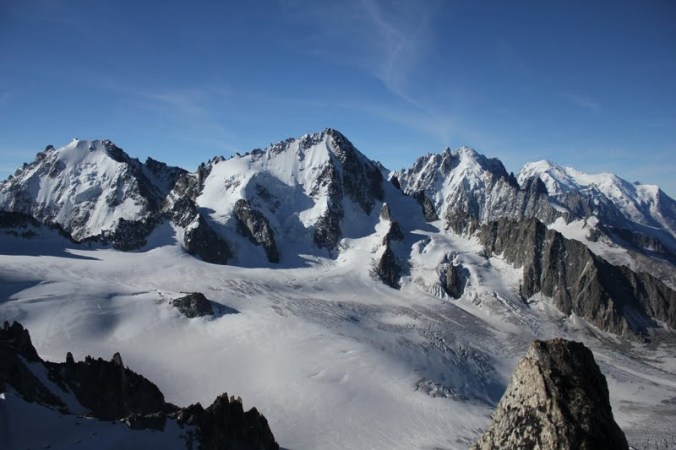
I’ve digressed however, and need to explain how I managed to find myself feeling tike a mouse in a bowling ally. The start had been almost civilized, a late-ish rise at 4.30am from the warmth and comfort of the Albert Premier refuge; the cloud which had clung to the peaks the previous evening had evaporated during the night leaving the mountains stark against a black sky. Across the Tour Glacier the magnificent shape of the Aiguille du Chardonet dominated the view. High on its ridges tiny pinpricks of light move in the dark, signs of life in this barren world from a party of four who had left at 2.00am to climb the Forbes Arete.
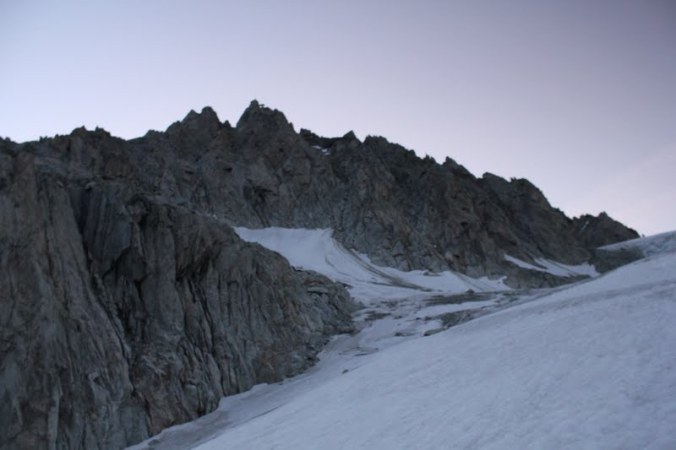
Our objective is more modest, the Aiguille du Tour a peak of 3,540m it’s spiky twin summits more austere and brutal looking than the glamorous Chardonet not having the dressing of white glaciers to clothe its naked rock. From the base and staring up you can just see the giant table of rock that gives our chosen route it’s name; a breakfast bar for giants on the roof of the Alps.
A quick scramble over the moraines of puts us down onto the quickly shrinking Tour Glacier which fills the valley between our peak and the Chardonet, but is now seemingly in full retreat in our warming world, freeing more and more rock from millennia it’s icy prison. All the glaciers in the range are much smaller than one hundred years ago and Dom a more frequent visitor has noticed changes in the past few years.
On the glacier approach
In alpinism you do a lot of walking! Having roped up it’s a slow trudge up the frozen river of ice, crevasses stand out black and stark against the white surface. Thin slivers of nothingness over which I step unable to resist the urge to look down and peer in to the fathomless depths below; voids like some terrestrial black hole.
We think we get to the start of the route, the guidebook had been singularly unhelpful on this point saying something like: “start at a couloir, climb to the ridge and then to the table”; unfortunately there appear to be lots of couloirs and ridges to choose from. Moving together Dom leads the way up into the couloir we selected as the best bet, I follow about 20m behind; although we are joined by the rope we are each in our own little world of concentration focusing on movement and control of handhold and foothold in this 3D landscape.
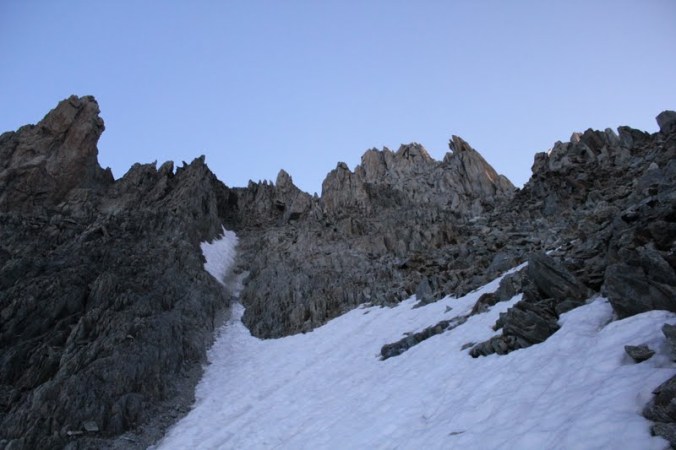
The climbing is easy but quite loose, and the anxiety begins to build. After about 150m the gully broadens into a small amphitheater and this is where I think we went wrong. I spot an easy looking gully out right Dom a slightly harder one left which leads to a bigger couloir above. We go left into chose central.
Celebration du Choss!
I think this is about where you came in. The next hour was a deeply unpleasant experience as we picked our way through what can only be described a festival of loose shattered rock only attached to the mountain by the vagaries of friction and melting ice. Dom climbs excellently knowing anything he knocks off is going to come straight down and hit me. I’m less successful, a badly place foot and the rock shifts then collapses under my weight, there is silence for a second then two rocks are falling, then three. Within seconds we can see a cascade of stone crashing down the route we’ve just taken. Dom and I watch silent until the sounds of the fall fade away “Shit I hope nobody is following us; actually, thank fuck there is nobody above us”.
The gully is strewn with loose rock
It’s with relief we reach the ridge, solid rock, sturdy and secure, the climbing and with it my mood change as the views open up and the sun warms my body and lifts the nervous tension of the last few hours. Above is perched the table, a massive slab of granite supported on a small pillar of rock, getting onto it is supposedly the crux of the route. A few minutes later following a bit of yarding up on in situ gear and a climbing move best described as the “fish out of water belly flop” I lie exhausted on top of the table.
Stood on the table with the Chardonet in the background
From now the rest of the day is a romp; working our way along the ridge the climbing is superb, weaving in and out of the spikes and flakes of rock, looping the rope this way and that way for protection from the voids either side. The moves are never hard and the rock is good; this is what I love best about alpinism the joy of movement through spectacular and beautiful terrain. I try to dawdle stopping to admire the contrast in colours, white snow, brown rock, and blue sky.
Far below is the green trench of the Chamonix valley it’s floor hidden from view, beyond it the wall of the Aiguille Rouge mountains, peaks which tower over our campsite but from our current vantage point look small and devoid of the snow and ice of the Mont Blanc Massif.
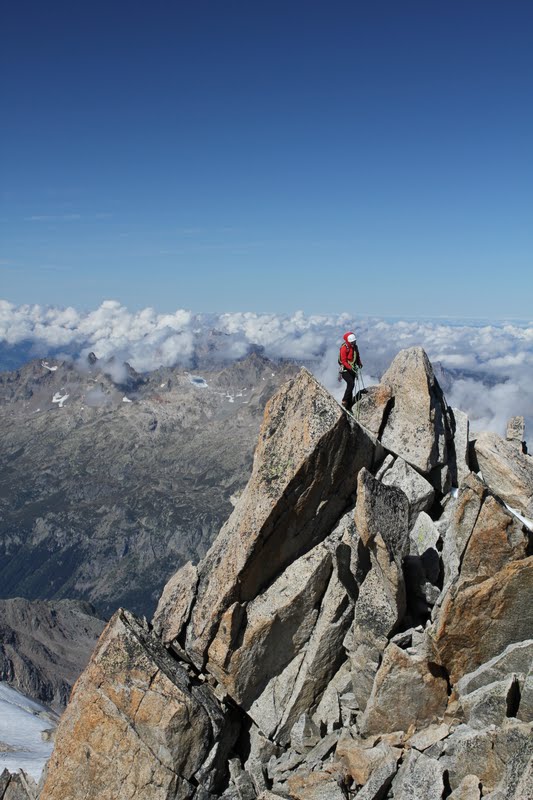
A climber on the final section of the ridge
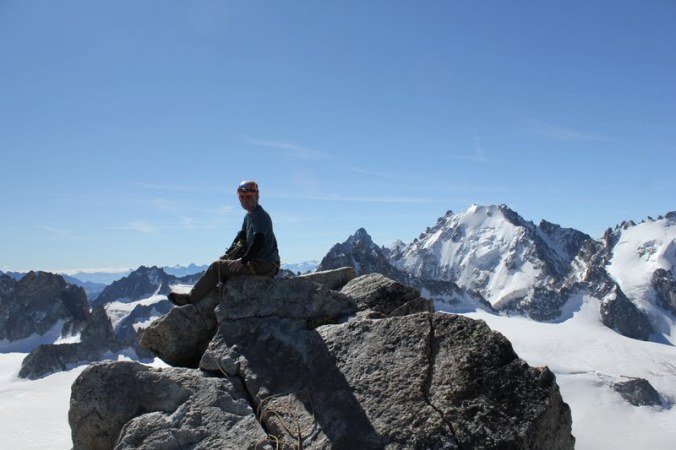
The south top of the Tour is a couple of small slabs of granite, Dom and I sit for a while surrounded on all sides with spectacular views. This is the first time I’ve ever topped out in the Alps and seen the ground fall away on all sides. Finishing on a proper summit feels like a much more complete experience than the routes I’ve done before which finished at ill defined points with true summits towering above them.
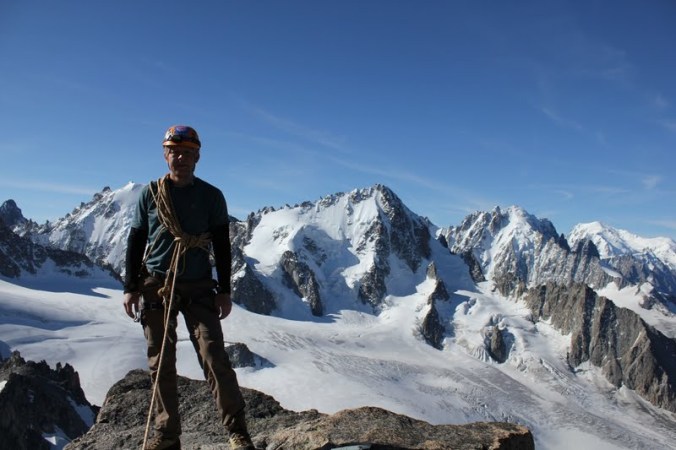
From so high the other mountains take on a different appearance, across the glacier the Chardonet which still out-tops us by about 300m is no longer the towering peak it was from the hut. From here I can trace the ridge line that marks the watershed of the range, snow falling one side destined to flow west the other side east, both entombed in a glacial river of ice. I’ve always climbed for the views, the space, and the landscape rather than the gymnastic and technical difficulty. It’s for minutes like this that I return again and again to the hills.
On the summit with the Aiguille du Argentier behind
Chardonet, Argentier, and the Tour Glacier; the prominent ridge of the left of the Chardonet is the Forbes Arete
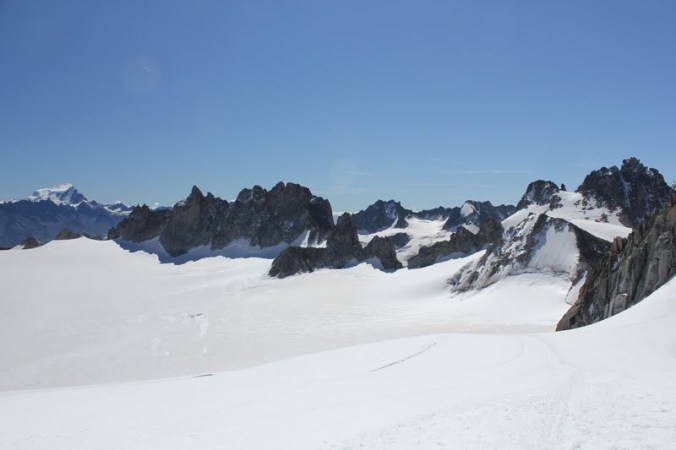
We drop off the back of the Tour, its normal ascent route being a short scramble down to the glacier and perhaps one of the most frequented routes in the Alps. The snow is now soft and slushy in the sun; T-shirt weather at 3000m. The vast Plateau du Trident stretches out before us as parties of little black dots clustered at neat intervals apart move slowly over it’s surface like ants, roped parties of climbers returning from today’s objectives.
Were now in Switzerland, standing on the Trident a glacier that flows north east opposed to the west flowing Tour Glacier where we started this morning. We cross back into France by the Col Sup du Tour a short rocky step crossing the watershead of the range and marking the border between France and Switzerland. A well beaten trail through the snow leads down from the col and back to the moraine with the mountains towering above us once more. It’s been a good day.
Migrated from my old site this was originally published in June 2012
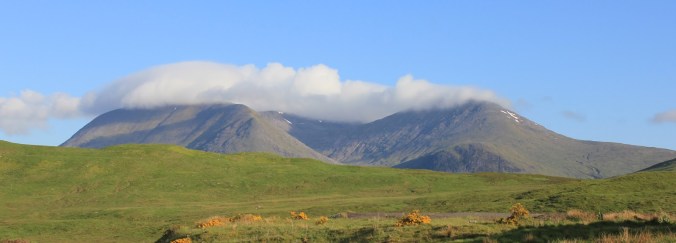
With Scotland basking under a high pressure system bringing glorious blue sky’s and little wind the obvious thing to do was to go for a big ride, linking togeather the netwoork of tracks and trails that wind through the valleys and cross the passes. Starting from Tyndrum the route initially follows the West Highland Way before heading towards the western end of Loch Tulla. Here tarmac is dispensed with entirely and the route runs the entire length of Glen Kinglass before emerging into Glen Etive and then back to civilisation.
A ride that clocks in at almost 60km (even if the guidebook claims the contrary) and leaves you miles from your starting point may not seam too good an idea. Here however is the master stroke, both start and finish are served by stations on the railway line to Oban; time it right and you’ll be back for tea and hero biscuits in no time, get it wrong…well don’t get it wrong!
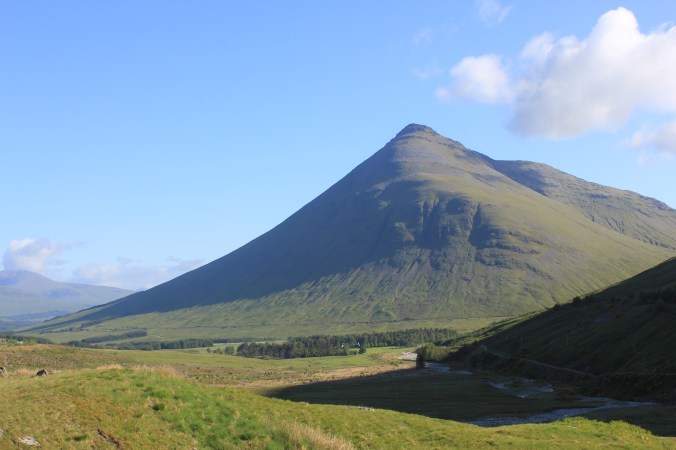
Ben Dorian
Stob Ghabar from the road to Inveroran
The initial section on the West Highland Way is mostly on a good track apart from one short section of poor single track that is possibly just about rideable if your brave. An initial climb leaves you at the head of Glen Orchy with great view down toward Ben Dorain a giant cone of a hill that dominates the first few kilometres of the ride until you finally contour round it’s flanks and drop down towards Bridge of Orchy Station.
Crossing over the A82 and following the minor road to Inveroran the last bit of tarmac the tyres will see for a while when it ends at the head of Loch Tulla. Running through a section of Caladonian Pine forest, trees twisted into fantastic shapes a contrast of greens and browns the route is ridiculously picturesque in the bright sun. Mercifully there is just enough of a cool breeze to keep the midges at bay and bring the fresh smell of the forest.
Loch Tulla
Beinn Achaladair and Beinn Dothaidh
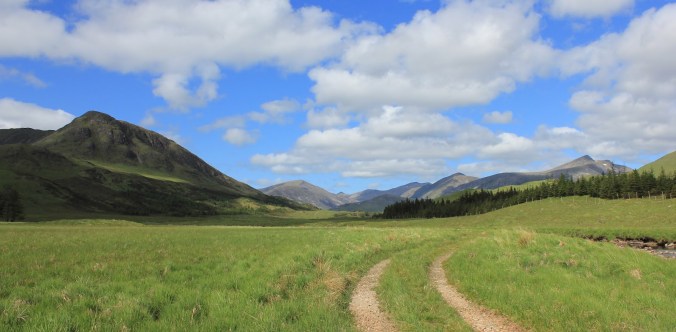
As the track begins to climb it slowly starts to deteriorate from broad hard packed gravel road as far as the remote farm at Clashgour to two thin wheel lines weaving and climbing steeply through the grass. The view both up the valley and back down towards the Bridge of Orchy Munros is superb, with a panorama of mountains stretching away into the distance and towering over the glen.
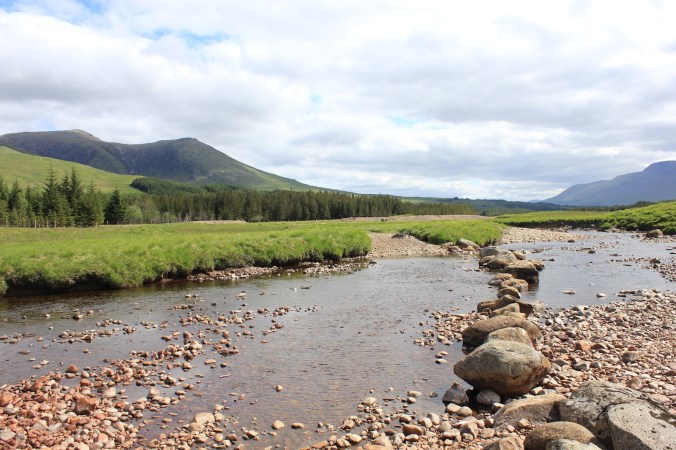
A line of stepping stones cross the River Shira, (bridge available slightly further unstream if the levels are slightly high) and mark the start of the wildest park of the ride. A few kilometers of good climbing reaches Loch Dochard and with huge views into the vast rounded coires of Glas Bheinn Mhor, and Stob Chir’an Albannaich the Glen Etive Munros here viewed from their hidden and less well trodden side.
Looking up Glen Kinglass
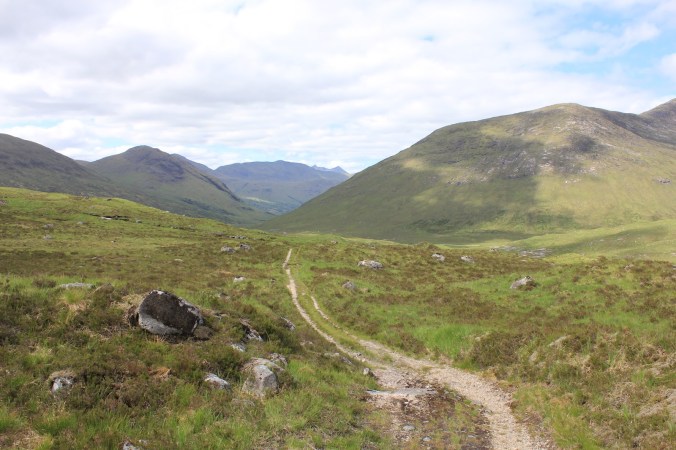
From here the trail is little more than a thin sliver of single track dropping down into the valley which opens out in front. Occasionally great rounded slabs of granite bedrock outcrop at the surface like vast boiler plates; their gentle angle and sooth grippy surface a joy to ride.
The route follows the infant river Kinglass here a succession of waterfalls and short canyons as it makes it’s way down the steep valley. A line of inviting plunge pools break the rivers flow and one of these offer a cool, ok cold but refreshing dip at lunchtime. Lower down the track improves before becoming a proper gravel road at Glen Kinglass Lodge then following the river for at least ten kilometres to the foot of the glen
and onwards….
The River Kinglass flows into Loch Etive mid way down it’s length; the loch itself is a thin sliver of sea that cuts far inland, its narrow upper reaches overlooked by some of the finest hills in the highlands. Looking back up the loch the peak of Ben Strav dominates the foreground and in the distance the fine cone of Stob Dubh marks the head of the loch.
The track now winds its way round the edge of the loch clinging to the hillside and delivering a lot of short sharp shocks to the legs with some surprisingly steep climbs. Having now covered about forty K the gradient feels hard, each climb requiring a real effort and inevitably turns out to be never the last one. Ben Cruachan looms ahead and must offer a fantastic view the entite length of Loch Etive.
Looking up Glen Etive
This final section lasts much longer than expected and despite the good surface is the hardest section of the ride the steep climbs draining down on tired legs. Then suddenly its back to tarmac and cars for a short section on the A83.
Arriving in Taynult a bit early for the train I settle down for a coffee and cake and watch sea kayaks out on the loch. Todays ride really was one of the most fantastic I have ever done, never particularly hard but with a great remote feel and sense of journey you only really get when you do a one way trip. As the train rattles up towards Tyndrum there can be few better ways than to spend a day than this.
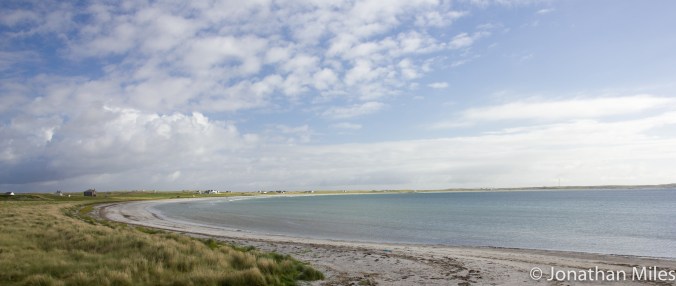
If you block out the cold it could almost be the Mediterranean, the beach an expanse of golden white sand gently lapped by a turquoise blue sea, fading gradually to deep blue moving out into the ocean. My nerves are however, telling me that whatever images my eyes may be sending to my brain they beg to differ with the conclusion that I’m swimming in a gentle bay somewhere in the Agean Sea; the water is numbingly cold and I can only stomach a few minutes immersion before I have to drag myself to the beach to warm up in the warmth of the sun.
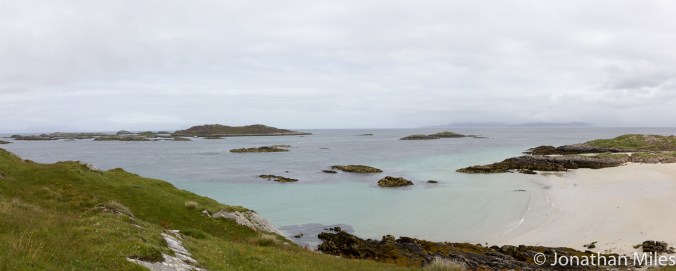
The beach I’m swimming off, known as North Bay is, logically enough located on the northern tip of Coll one of the Inner Hebrides, small specks of land off the coast of Scotland between the mainland and the island chain of the Western Isles.
North Bay on Coll
Coll is a small island only about 20km long by 5km wide and I had spent the morning exploring its roads, tracks, and beaches on my bike before stopping for lunch and a brief swim in the sea. Coll and its neighbour Tiree are an ideal pair of islands to explore by bikepacking, and I had chosen them for my first trip with my new off road BOB trailer. The ferry operator Caledonian MacBrayne which serves the islands from Oban on the mainland don’t charge extra for bikes making tickets excellent value.
Coll and Tiree are very contrasting neighbours, Coll is much more rugged with an interior of peat bog and lochans, the coastline is jagged particularly the eastern coast where the sea breaks itself over rocky outcrops of Lewisian Gneiss which at 2.5-3 billion years old are some of the oldest rocks on Earth and a window into deep time.
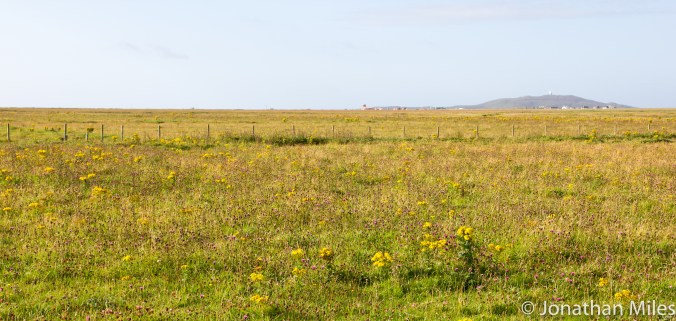
Tiree in contrast is much lower lying than Coll and, with the exception of three small hills is very flat giving a big sky feel to the landscape which is covered in fertile grasslands covered in wild flowers. The beaches are huge and open with the sea rolling in over the white sands giving apparently world class surfing and kiteboarding conditions.
Tiree Grasslands
Kitesurfers off Tiree
On most days I managed to wild camping amongst the dunes behind the beachs hiding the tent away amongst the peaks and troughs of sand and enjoying a feeling of remoteness at the sunset over the sea. One particular sunset on Tiree was astonishingly spectacular the clouds in the sky luminous pinks and golds as the sun faded from view.
In the morning dregs of sleep were expunged with a refreshing dip in the sea to get the blood running. On all the beaches I explored I found the sand to be generally well packed, even enough to pull the laden trailer on. The gradient shallow was also shallow giving quite a large tidal range between high and low water levels.
By backpacking I could easily strike the tent in the morning and tow all my kit with me as I explored the islands by bike, roads, tracks, and paths were gentle enough to cycle easily even pulling my kit with me. Although not as bad as the mainland the midges were still out if the wind dropped but normally there was enough of a sea breeze to keep them at bay.
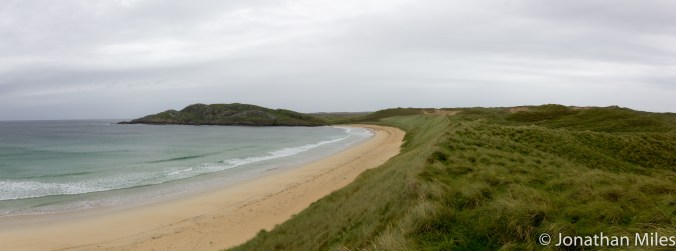
Traig Feall Beach on Coll
Once a week (Wednesday) a ferry runs from Coll and Tiree out to Barra in the Western Isles; an makes an excellent extension to the tour as the Barra ferry returns to Oban giving a nice circular route, and having missed Barra on my previous visit to the Western Isles I made use of this to add a few days to the trip.
The ferry crossings especially to and from Barra were for me almost a romantic experience, a glimpse of time gone before air travel when it took a week to cross the Atlantic and five weeks to get to Australia and the journey itself was an adventure. The distance to Barra takes the ship out of sight of land and leaves you standing on deck surrounded by the expanse of the sea as the ship ploughs on under the giant dome of the sky making progress but never seaming to move.
A beach on Tiree
Barra is much larger than Coll and Tiree and more heavily populated although the roads are still very quite. A good ride to explore the island is to cycle round the road which circles the hill of Heaval which dominated the centre of the island. Diversions from this can be made south to explore the island of Vatersay which is connected to Barra by a causeway and has yet more astonishingly beautiful beaches; or to the north to see the bay of Traigh Mohr and if you time it right a truly unique experience.
Barra has a problem in that there is not enough flat land for an airport, at low tide the sea retreats from Traigh Mohr to give a vast expanse of flat sand and the worlds only beach airport with scheduled flights. Watching an aircraft land in a mass of spray is a spectacular sight.
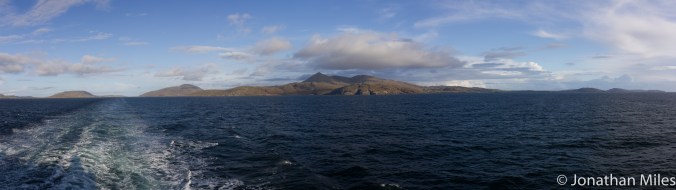
Leaving Barra
Logistics
Wild camping is allowed in line with Scottish access laws, this means walkers and cyclists not camping from cars.
Coll – There is a campsite at Garden House towards the south of the island and a bunkhouse in the main village of Aringour. The village also has a small shop although opening hours are short. There are free toilets and paid showers available 24 hr at the community centre.
Tiree – To my knowledge there is one campsite on the island. Camper vans, motor homes , and car campers must use this or one of 11 designated crofting camping areas which must be booked and paid for on arrival. This is to protect the vulnerable grasslands which took a pounding before the system was introduced. There is a well stocked Coop just up from the Ferry Terminal
Barra – Campsite at Bove just north of Castlebay and also in the north of the island, Coop in Castlebay.
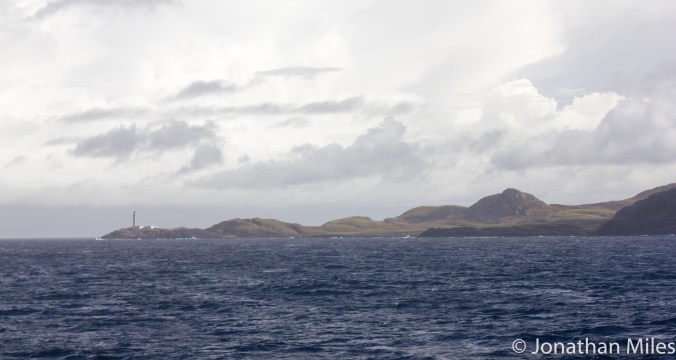
Arnamurchan Lighthouse, the westernmost point of mainland UK
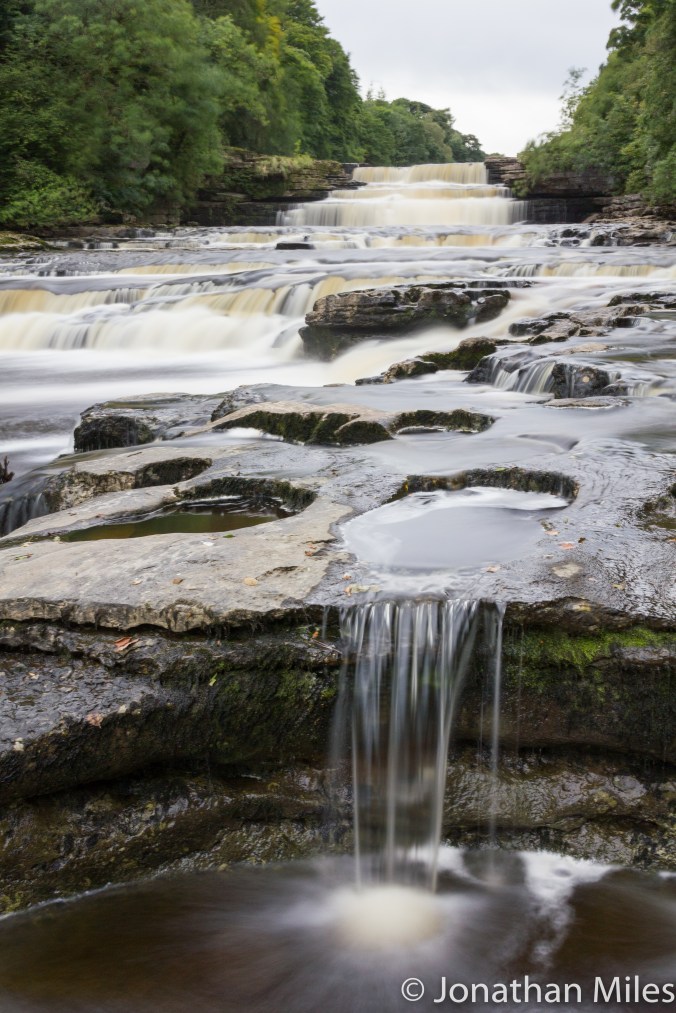
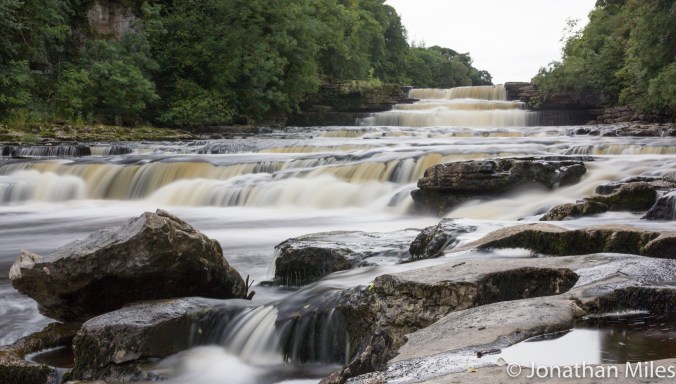
Ok, so its not exactly an unknown location but I had not visited Aysgarth Falls since childhood! There are three series of falls on the River Ure as it passes the village I chose the Lower Falls as they are the easiest to access as a photographer.
I’m still learning how to get the best out of the Lee Big Stopper, I think here I’ve given the water a little too long and begun to lose too much definition.
Once the trees begin to get their autumn colour it should be a beautiful picture.





 Boots, Boats, and Bikes